

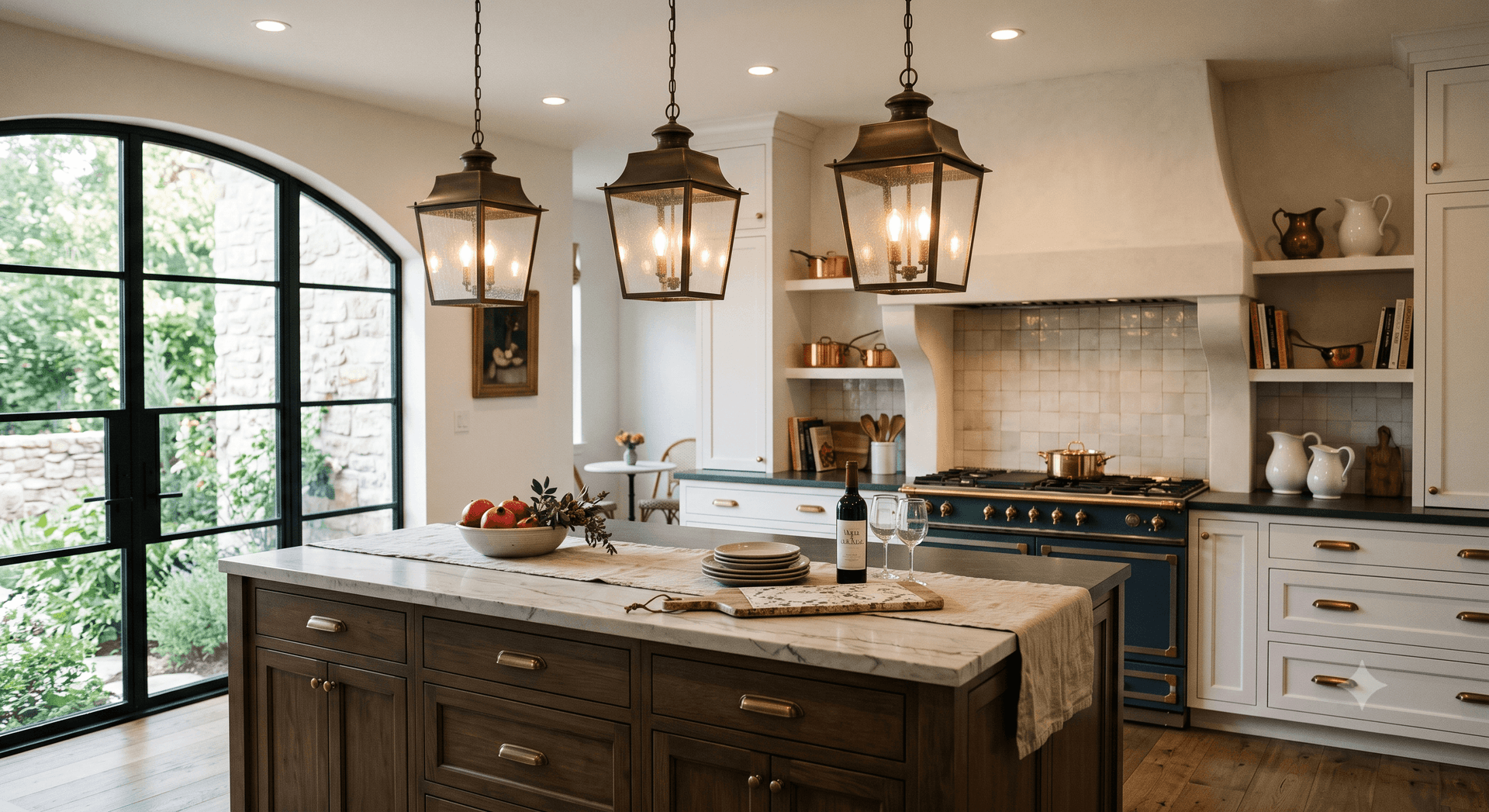
Choosing Pendant Lighting for a French-Inspired Kitchen Island
If you are planning a French-inspired kitchen, you already know that every detail matters, from the range to the hardware to the tile. But one detail people often underestimate is the lighting hanging above the island. Pendant lighting does more than light up your countertop. It sets the mood, ties your design together, and can make or break the “French country” or “modern French” look you are going for. The right fixture can turn a functional workspace into the visual heart of the room, the spot where guests naturally gather with a glass of wine while dinner comes together.
Choosing pendants is trickier than it looks, though. There are decisions about scale, finish, glass type, mounting height, and how the fixture talks to everything else in the room, especially your range. Get it right and the kitchen feels curated and intentional. Get it wrong and even a beautifully designed space can feel a little off, like a well-tailored outfit paired with the wrong shoes.
In this guide, we will walk through how to choose pendant lighting for a kitchen island, the styles that work best in a French-inspired space, and a few mistakes to avoid along the way, so you can shop with confidence instead of guessing.
Why Pendant Lighting Matters in a French-Inspired Kitchen
French kitchen design leans on warmth, texture, and a sense of craftsmanship. Nothing feels mass produced, and nothing feels like it was picked purely because it was on sale. That same philosophy applies to lighting. The right pendants act almost like jewelry for your island, drawing the eye and reinforcing the story of the rest of the room. They are one of the few design elements you look at, and stand under, every single day, so their impact is felt long after the renovation dust settles.
Think about the difference between a kitchen with three mismatched builder-grade fixtures and one with a pair of hand-blown glass pendants in warm brass. The layout, the cabinetry, and even the appliances could be identical, yet the second kitchen reads as considered and finished. Lighting is one of the most cost-effective ways to elevate a space because it changes both how the room looks during the day and how it feels in the evening, when the rest of the kitchen fades into shadow and the pendants become the glow everyone gathers around.
Lighting is just one piece of that warmth, of course. If you're mapping out the rest of a French-inspired kitchen at the same time, our guide on how to create a chef-style kitchen at home walks through the other decisions worth making early.

The Role of Lighting in French Country Design
French country and French-inspired kitchens tend to favor natural materials, aged metals, and soft, warm light rather than bright white or cold industrial fixtures. Lighting is treated as a design feature, not an afterthought, which is a mindset shift for a lot of homeowners who are used to thinking of light fixtures as the last item on a punch list. If your kitchen already includes a statement range or custom cabinetry, your pendant lights need to feel like they belong in the same conversation, not like they were picked up separately at the last minute.
This is also about color temperature, not just style. Warm white bulbs, generally in the 2700K to 3000K range, flatter natural stone, brass, and painted cabinetry in a way that cooler daylight bulbs simply do not. A gorgeous lantern pendant fitted with the wrong bulb can still make a French kitchen feel clinical, so the fixture and the light it casts both need to be part of the plan.
How to Choose the Right Pendant Lights for Your Island
Choosing pendant lighting is not just about picking something pretty online. A few practical factors make a real difference in how the finished kitchen looks and functions.
Consider the Size of Your Island
A general rule is to choose pendants that are about one-third the length of your island, divided evenly with gaps in between. Two to three pendants usually work well for a standard island, while longer islands may need a linear fixture or four smaller pendants. If your island is roughly 6 feet long, for example, three pendants spaced about 24 to 30 inches apart on center will typically look balanced without crowding the countertop below.
It helps to measure and mark the ceiling with tape before you buy anything. Stand at the entrance to the kitchen and look at the spacing from a distance, not just from directly underneath, since that is the angle most people will actually see it from day to day. Oversized pendants on a small island can overwhelm the space, while undersized pendants on a large island can look like an afterthought, so err on the side of a slightly larger scale if you are unsure.
Pick a Finish That Complements Your Range and Hardware
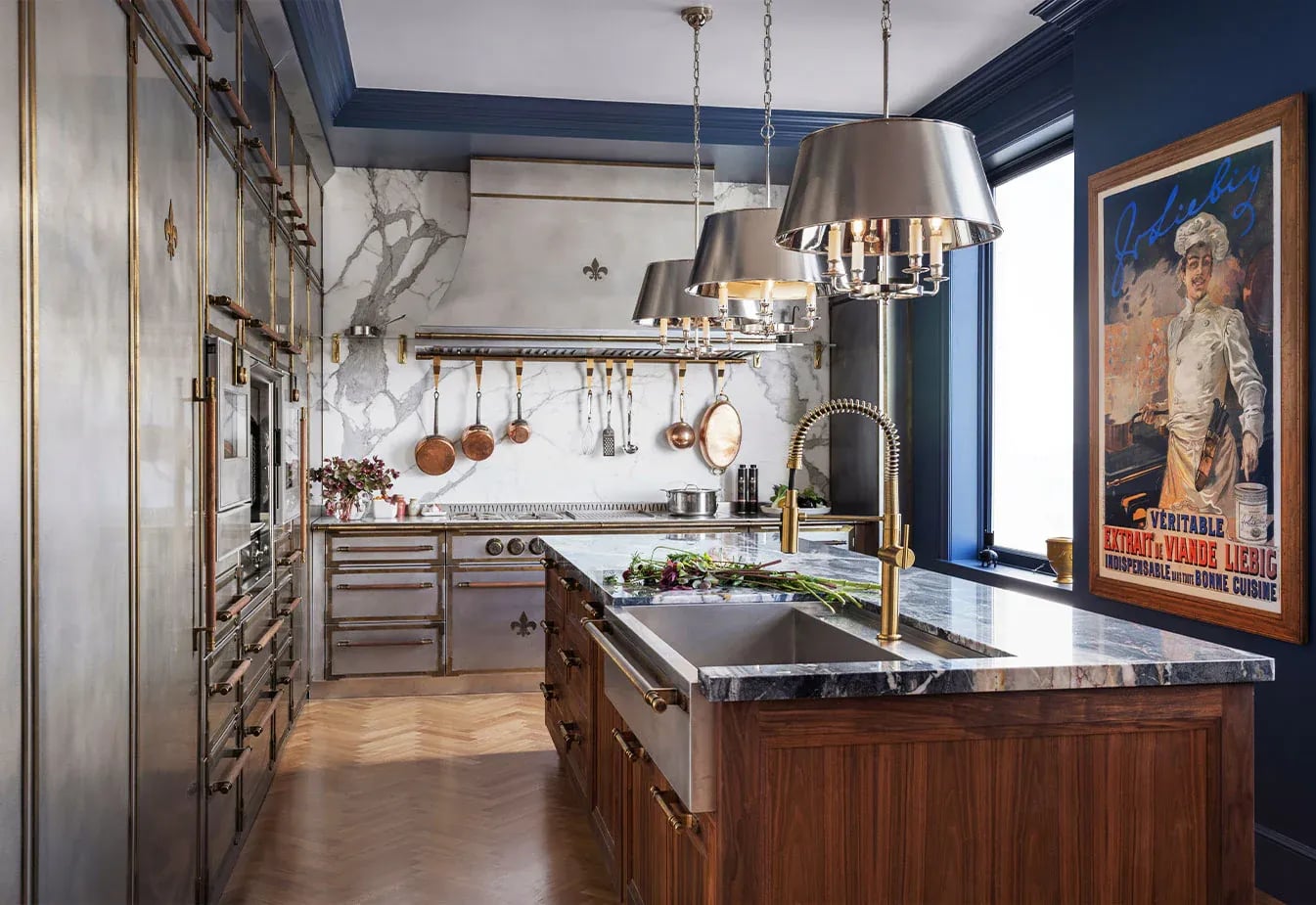
This is where a lot of homeowners get stuck. If your range, faucet, or cabinet hardware is in brass, black, or brushed nickel, your pendant lighting should echo one of those finishes rather than introducing a new metal into the mix. Consistency across finishes is one of the easiest ways to make a kitchen feel intentionally designed rather than pieced together, and it is also one of the cheapest fixes if a kitchen already feels slightly disjointed.
That does not mean every metal in the room needs to match exactly. A brass range hood, black pendant fixtures, and brushed nickel cabinet pulls can absolutely work together, as long as one finish clearly leads and the others play a supporting role. A good rule of thumb is to pick a dominant metal, usually whichever one appears on your range or hood, since that piece is the visual anchor of the kitchen, and let your pendant choice reinforce it.
Layer Light for Function and Ambiance
Pendants over an island should not be your only light source. Pair them with recessed lighting or under-cabinet lighting so you have bright, functional light for cooking and prep, and softer pendant light for everyday ambiance and entertaining. Relying on pendants alone often means you either overlight the room to see well enough to cook, which washes out the mood you were going for, or you underlight it and end up chopping vegetables in your own shadow.
Putting your pendants and your recessed lighting on separate dimmable circuits gives you the most flexibility. Bright and even for meal prep, warm and low for dinner parties, and somewhere in between for an ordinary weeknight. It is a small electrical detail that is far easier to plan during a renovation than to retrofit afterward, so it is worth raising with your electrician early.

Thinking about the bigger picture for your kitchen, not just the lighting?
Because the kitchen you picture deserves every detail right
Popular Pendant Styles for a French-Inspired Kitchen
Once you understand the basics, it helps to know which styles actually read as French-inspired rather than generic farmhouse or industrial.
Lantern-Style Pendants
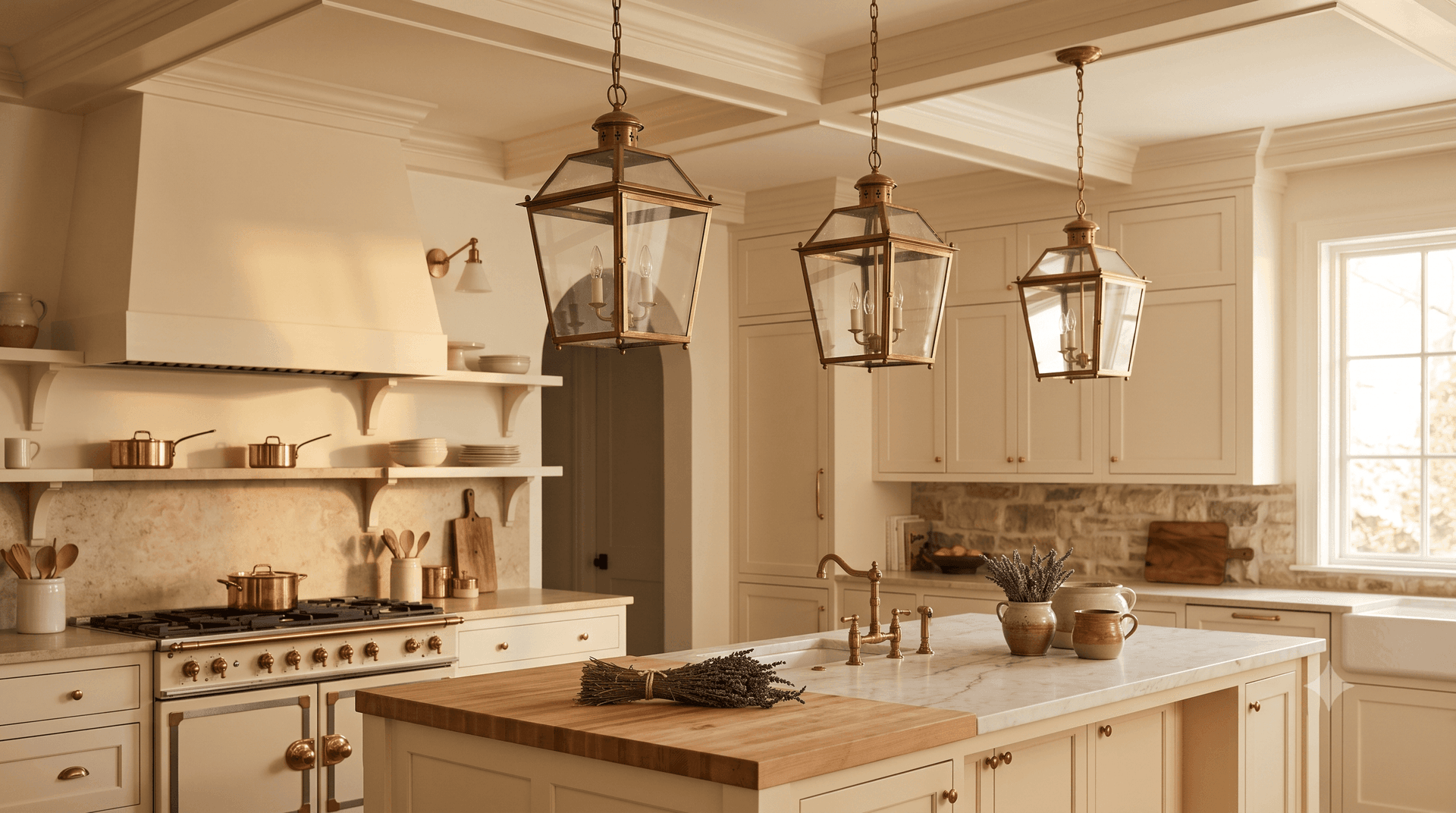
Lantern pendants, often in aged bronze or black metal with clear or slightly textured glass, are a classic choice. They bring a bit of old-world charm without feeling heavy or dated.
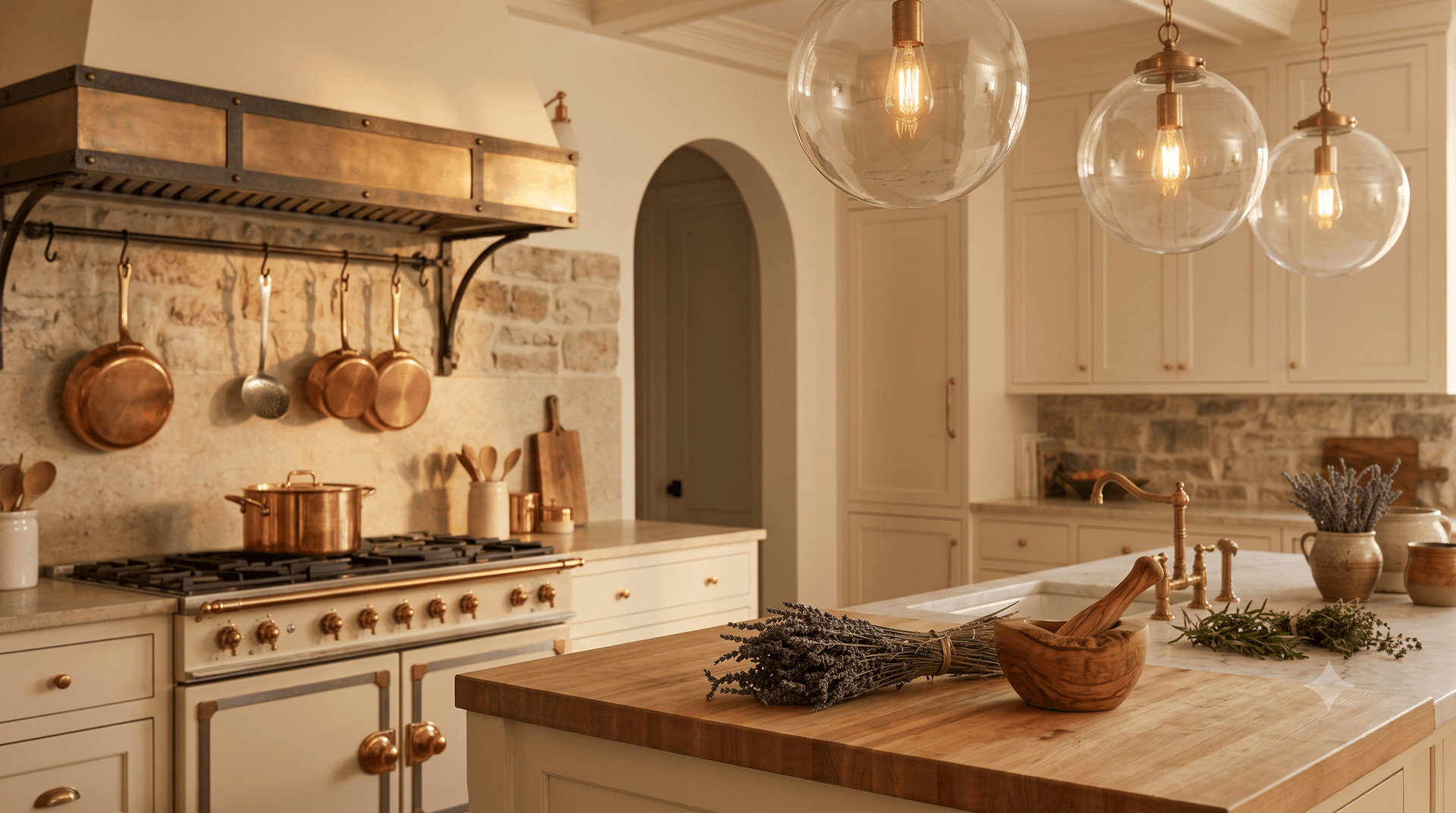
Glass and Brass Pendants
For a more refined, Parisian apartment feel, look at simple glass globes or dome shades paired with warm brass or antique gold hardware. These work especially well in kitchens with marble countertops or ornate range hoods.
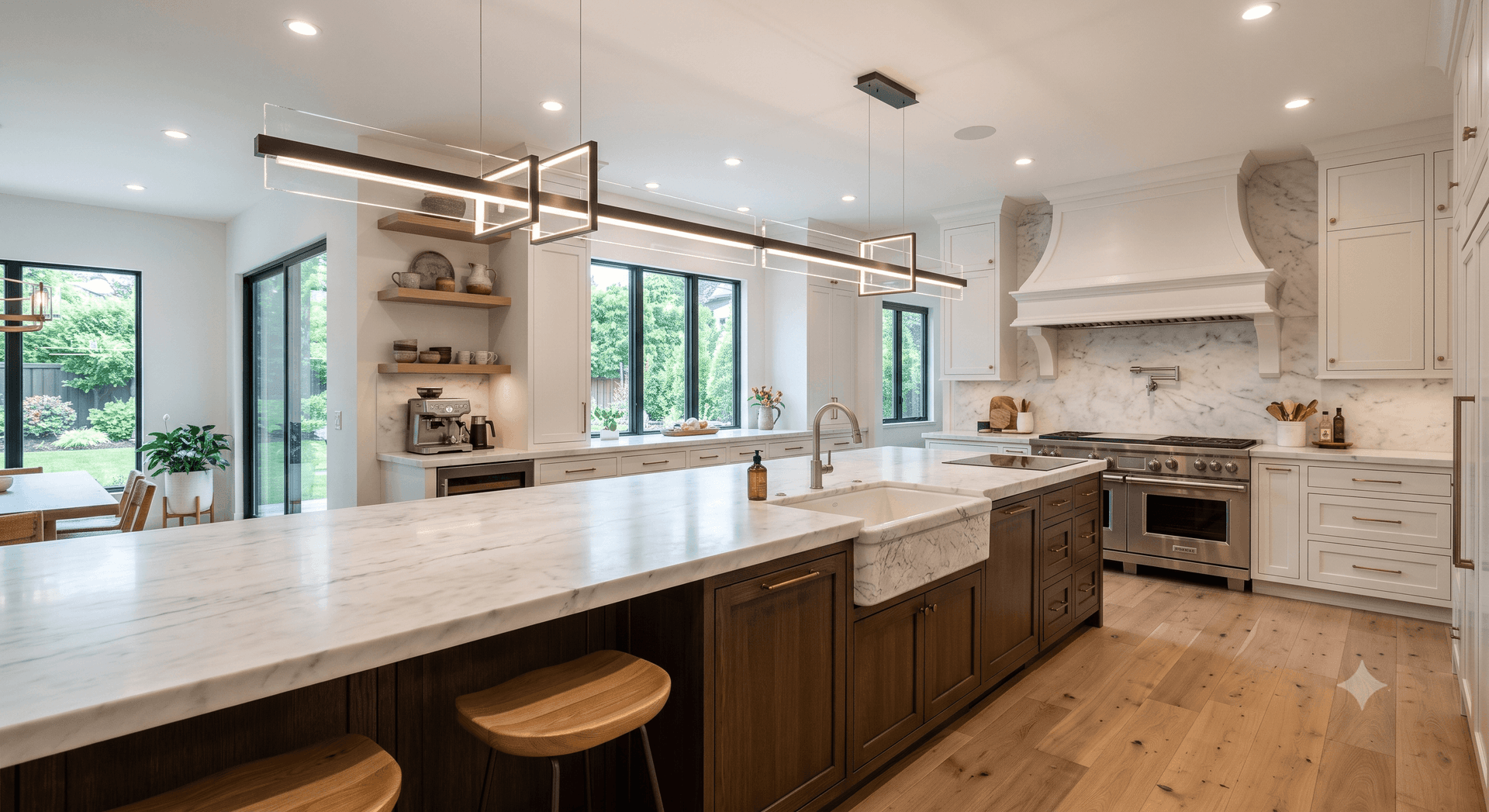
Linear Chandeliers Over Long Islands
If you have a long island or a large kitchen with a strong architectural range as the centerpiece, a linear chandelier style fixture can stretch across the space and act as a single dramatic statement rather than a row of separate pendants.
If you're weighing lighting alongside other design choices, our guide on top kitchen design trends for 2026 covers what else homeowners are prioritizing this year.
Common Mistakes to Avoid
Even with a clear style in mind, a few common missteps can throw off the whole look.
Hanging Pendants Too High or Too Low
The bottom of your pendant should typically sit 30 to 36 inches above the island countertop. Too high, and the fixture loses its visual impact. Too low, and it blocks sightlines across the kitchen or gets in the way while cooking.
Choosing Lights That Clash With Your Range
Your range is likely the focal point of the kitchen. Pendant lighting should support that focal point, not compete with it. A busy, ornate fixture over an already detailed range can make the space feel cluttered instead of curated.
Not sure which lighting and design choices will actually work together in your space?
A French range ties it all together, hardware to lighting.
Bringing It All Together: Lighting as Part of the Full Kitchen Vision
Pendant lighting is a small piece of a much bigger picture. The most successful French-inspired kitchens treat every element, the range, the hardware, the countertops, and yes, the lighting, as part of one connected design story rather than a list of separate purchases. If you are building or renovating a kitchen from the ground up, it helps to think about lighting early, alongside your range and cabinetry, rather than as a last-minute add-on.
Warm white, 2700K to 3000K. That's what pulls the warmth out of stone, brass, and painted cabinets, and it's a big part of what makes these kitchens feel lived in instead of like a showroom. Anything cooler, past 3500K or so, flattens that warmth out fast. Even a beautiful brass pendant can end up looking like it belongs in a dentist's office under the wrong bulb. Worth checking before installation day, because it's an easy thing to get wrong at the last minute, picking the right fixture online and then grabbing whatever bulb is on the shelf at the hardware store.
30 to 36 inches from the bottom of the fixture to the countertop. Enough light where you're working, but nothing hanging low enough to block your view across the room or knock into while you're cooking. Go higher than that range and the pendant kind of disappears, it stops doing anything for the space. Go lower and you'll be ducking around it, or losing the sightline to the rest of the kitchen. If your ceilings run tall, you can sit near the top of that range, but don't push past 36 inches just because you've got the height for it.
Not exactly match, but they should feel like they're part of the same conversation. If you've got other fixtures in the kitchen, over a sink or in a breakfast nook, they don't need to be identical to your island pendants, but wildly different styles sitting in the same room tend to read as unplanned. The metal finish is usually the easiest thing to keep consistent across fixtures, even if the shapes themselves vary.
Yes, and it's worth setting up during the renovation rather than trying to add later. A dimmer gives you the range to go bright for actual cooking and prep, then pull it down low for a dinner party or a quiet evening. Wiring pendants and recessed lighting on separate dimmable circuits is the setup that gives you the most control, since it lets you adjust each one independently instead of one dimmer trying to do both jobs at once.

Marcus Ellery
Marcus Ellery is a U.S.–based design writer and home–living enthusiast with a passion for exploring how thoughtful craftsmanship shapes modern spaces. With over a decade of experience covering kitchen innovation, luxury interiors, and architectural design trends, Marcus brings a balanced blend of storytelling and technical insight to every piece he writes.


Join Our World of Design & Cuisine
Receive curated stories on French craftsmanship, design inspirations, and culinary living — straight from French Ranges USA.