

How Many Burners Do You Actually Need? A Guide by Household Size
If you have ever stood in front of a range trying to decide between four burners and six, you already know the question is not as simple as it sounds. The right burner count depends less on the size of your kitchen and more on how you actually cook, how many people you feed, and how often you host. This guide breaks it down by household size so you can stop guessing and start choosing with confidence.
Why Burner Count Matters More Than People Think
Burner count determines how many dishes you can realistically manage at once without one pot going cold while another boils over. It also affects how much flexibility you have for different pot and pan sizes at the same time. A household that cooks one meal at a time has very different needs than one that is juggling a sauce, a side, a protein, and a pasta pot simultaneously. Before you think about brand or fuel type, it helps to think about how many things typically happen on your stovetop during a single dinner, since that number tells you almost everything you need to know before you even start comparing ranges.
Singles and Couples Rarely Need More Than Four
For one or two people, four burners are almost always enough, and in many cases even three can work well. Most weeknight meals for a small household involve one main dish and maybe one side, which rarely demands more than two burners running at once. The extra one or two burners on a four-burner setup simply give you breathing room for baking prep, a kettle, or a sauce reduction without crowding the main cooking area. Unless you entertain often or cook elaborate multi course meals regularly, going beyond four burners tends to add cost and counter footprint without adding real value.
As families grow, though, the math changes quickly, and this is usually where people start second guessing the range they already own.

Five Burners Tend to Be the Sweet Spot for Families of Four
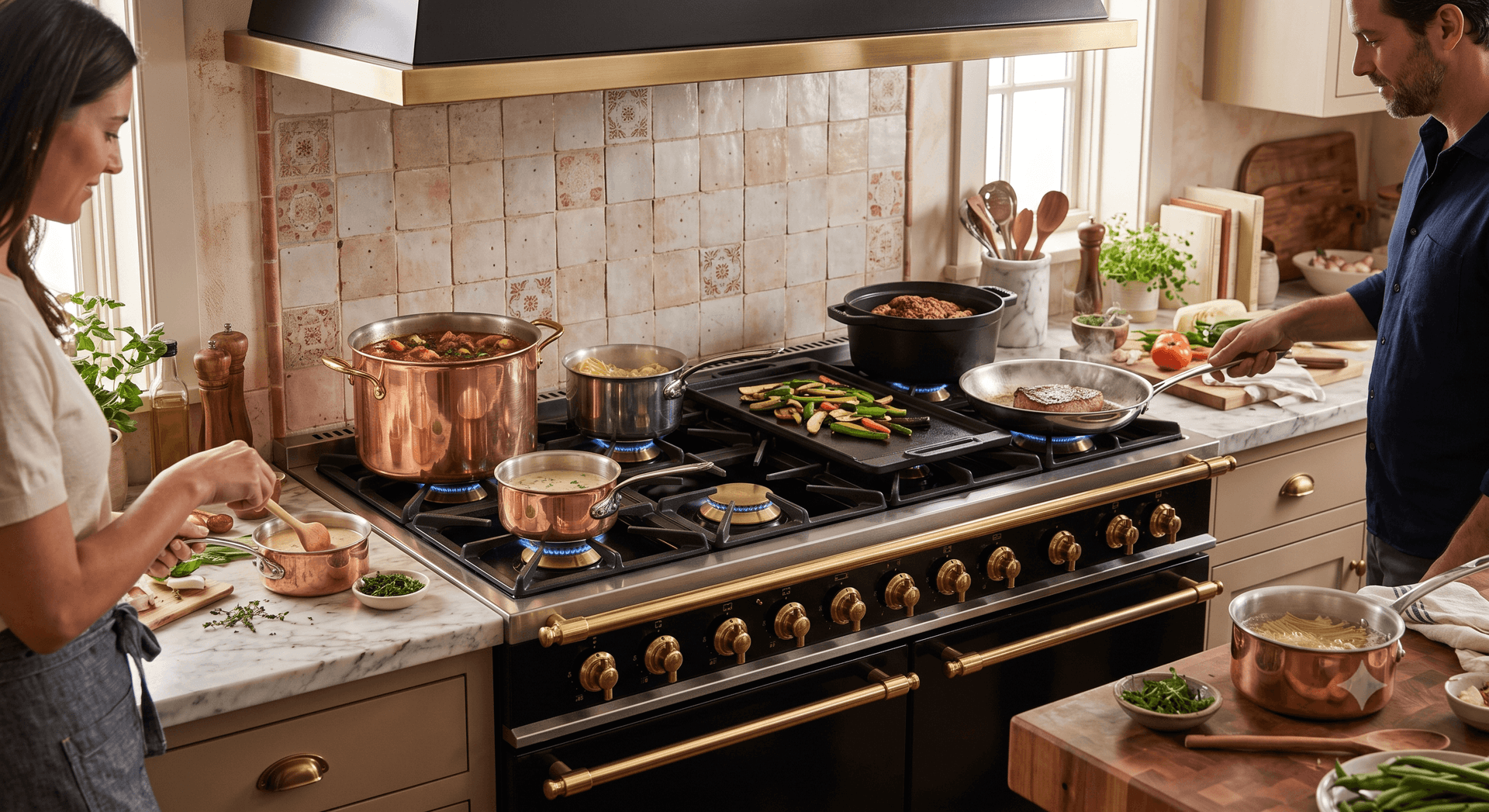
For most families of four, five burners turn out to be the number that actually fits real life. Between school lunches to pack, a growing kid who eats on a different schedule than everyone else, and dinners that usually stack a starch, a vegetable, and a main dish together, five burners let all of that happen at once instead of one pan finishing while another sits untouched. That fifth burner also earns its place when two people end up cooking side by side, which happens more often than most families plan for, since nobody wants to hover over a shared stovetop waiting for a spot to open up on a weeknight.
Once you move beyond a standard family dinner into regular entertaining, the calculation shifts again.
Quick tip: If you are between four and five burners, check the simmer burner size before deciding. A dedicated low-output burner often solves more daily annoyance than one extra full-size ring.
Larger Households and Frequent Hosts Often Benefit From Six
If you regularly cook for six or more people, or you host dinner parties where several dishes need to come together at the same time, six burners start to make real sense. Large family gatherings, holiday cooking, and dishes with multiple components all benefit from the extra capacity. A six burner range also tends to include a mix of burner sizes, which matters when you are running a large stockpot next to a delicate simmer sauce. This is where households often start looking at professional style ranges built for serious home cooking rather than standard four burner units. If you are weighing that upgrade against the rest of the kitchen, it helps to look at the full picture first, and our Luxury Kitchen Renovation Cost Guide 2026 breaks down where a range like this fits into the bigger budget.
Fuel type is another factor that quietly influences how many burners actually feel necessary in daily use.
Fuel Type Changes How Many Burners You Really Need
Gas ranges tend to offer more precise flame control across each burner, which is why many serious cooks prefer them for high heat searing and quick temperature changes. Induction ranges heat faster and more evenly, which can sometimes reduce how many burners you feel you need since cooking happens more efficiently. Dual fuel ranges combine a gas cooktop with an electric oven, giving you the responsiveness of gas on top with steadier baking results below. Anyone still weighing gas against induction should sort that decision out first, because burner count and fuel type end up shaping each other far more than most shoppers expect going in. For a closer look at how each option performs in daily use, our guide on Best Range for Home Chefs: Gas, Induction, or Dual Fuel walks through the tradeoffs in more detail.

Counter Space Deserves Just as Much Thought as Burner Count
This is the tradeoff most people underestimate. Every extra burner takes up width that could otherwise be prep space or landing room for hot pans. In smaller kitchens, a four burner range paired with generous counter space often cooks more comfortably than a crowded six burner setup with nowhere to put anything down. Measure your available footprint honestly before assuming more burners automatically means a better kitchen.
Choosing the right burner count is really about matching the range to how your household actually lives and cooks, not about buying the biggest option available. Once you know your number, the next step is finding a range built with the material quality, heat control, and design detail that makes daily cooking feel effortless. L'Atelier Paris builds exactly that kind of range, one where French inspired design meets the kind of everyday performance a busy kitchen actually needs.
It depends on how you actually cook more than how many people are at the table. If dinner usually means one pot and one pan, four burners will serve you just fine. But if you are the type of household that has a side dish going, a sauce simmering, and someone making eggs on a Sunday morning all around the same time, that fifth burner earns its keep pretty fast.
A simmer burner is built to hold a very low, steady flame without flickering out, which makes it ideal for melting chocolate, warming sauces, or keeping something at a bare simmer for hours. A regular burner can technically go low too, but it is harder to keep it stable at that end of the range. If you cook a lot of sauces or delicate dishes, having at least one true simmer burner matters more than having an extra full-size one.
Fuel type is usually worth deciding first, since it changes how efficiently each burner performs and can shift how many you actually need. Induction, for example, heats faster and more evenly, so some households find they need fewer burners than they would with gas. Once you have settled on a fuel type, burner count becomes a much easier decision.
Not really, since burner count and cooktop size solve different problems. A bigger cooktop with the same four burners just gives you more spacing between them, which helps with large pots but does not add cooking capacity. If you need to run more dishes at once, you need more burners, not more room around the ones you already have

Marcus Ellery
Marcus Ellery is a U.S.–based design writer and home–living enthusiast with a passion for exploring how thoughtful craftsmanship shapes modern spaces. With over a decade of experience covering kitchen innovation, luxury interiors, and architectural design trends, Marcus brings a balanced blend of storytelling and technical insight to every piece he writes.


Join Our World of Design & Cuisine
Receive curated stories on French craftsmanship, design inspirations, and culinary living — straight from French Ranges USA.