
Open Shelving vs. Upper Cabinets: Pros, Cons and Design Tips
If you've ever stood in the middle of a kitchen renovation and thought, "Do I even need upper cabinets anymore?" you're asking exactly the right question. This is one of the most searched kitchen design decisions right now, and honestly, it deserves a proper answer rather than a quick Pinterest scroll.
Both options have genuine merit. Neither is universally better. The right choice depends on how you cook, how you live, how much space you're working with, and what kind of kitchen feels like home to you. Let's walk through all of it. If you're planning a larger remodel, understanding how to choose the right size French range for your kitchen layout can also help inform storage and design decisions. Let's walk through all of it.
Understanding the Core Difference
Upper cabinets are enclosed wall-mounted storage units with doors, shelves inside, hinges, and handles. Everything is hidden behind a face. Open shelving replaces those cabinet boxes with exposed brackets and boards, putting everything on display at all times.
One gives you concealment and capacity. The other gives you visibility, airiness, and an opportunity to make your kitchen feel more like a living space than a utility room. That's the fundamental trade-off, and everything else flows from there.
The Real Benefits of Open Shelving
Open shelving has moved well beyond being a passing trend. There are solid, practical reasons people are choosing it and keeping it.
It opens up the room visually. This is the biggest functional benefit. When you remove the visual bulk of upper cabinet boxes from your walls, the kitchen suddenly breathes. Light travels further, sightlines extend, and the ceiling feels higher. If you're working with a smaller kitchen layout, this single change can make the room feel dramatically larger. It's one of those small kitchen design ideas that make any space feel larger without requiring any structural work.
Everything is immediately accessible. There's no opening doors, no hunting for the right shelf, no forgetting what's buried in the back. For people who cook frequently and reach for the same items every day like olive oil, everyday spices, and go-to bowls, open shelves can genuinely streamline your cooking routine. Your most-used items are visible, reachable, and back in place in seconds.
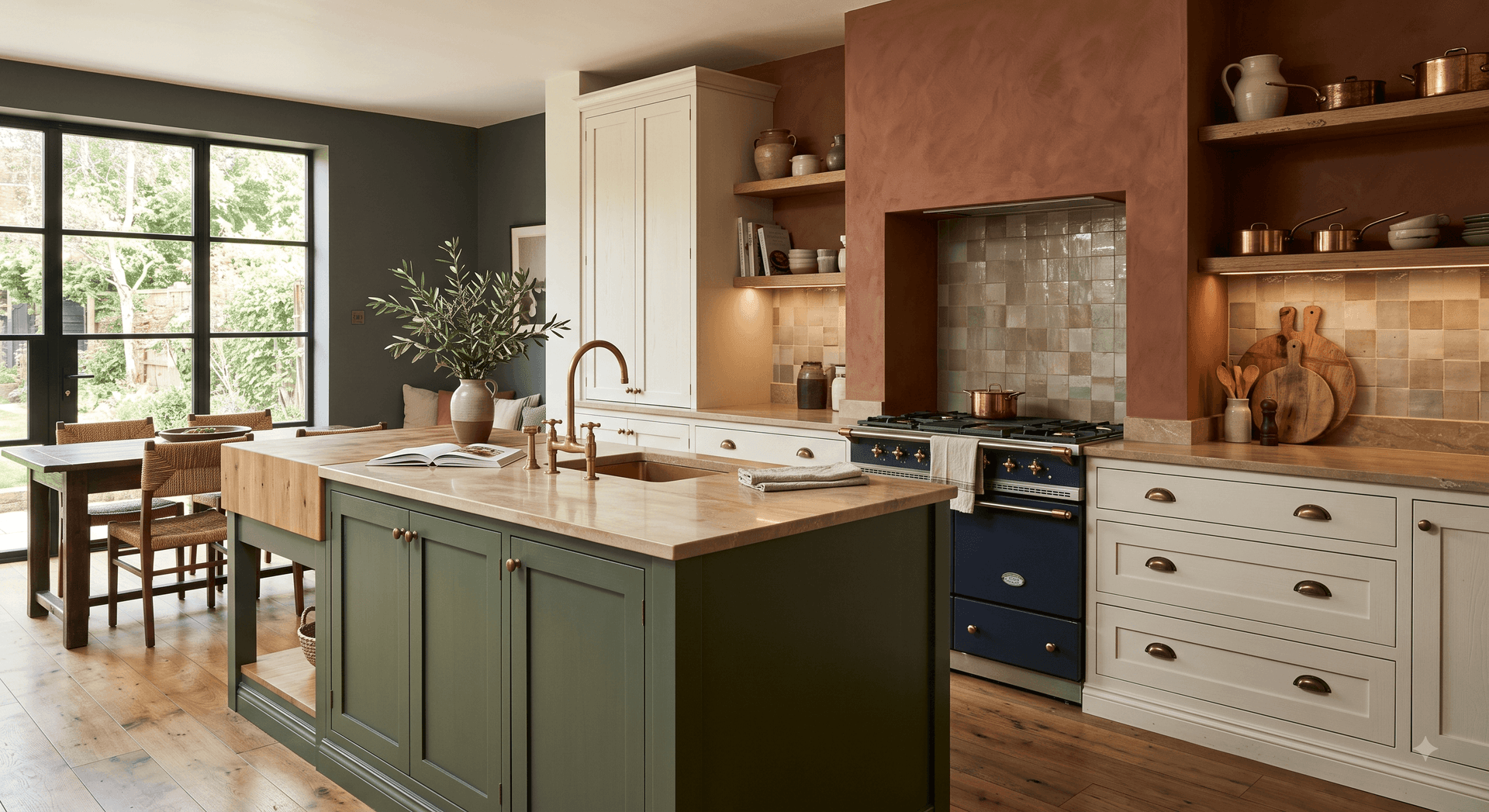
It encourages intentional, beautiful organization. When your shelves are exposed, you naturally become more selective about what lives there. This is where open shelving starts to double as décor. A row of matching ceramic canisters, a stack of linen-toned dishes, copper measuring cups, a small herb pot. When placed thoughtfully, open shelves can become the design anchor of the entire kitchen.
It tends to cost less upfront. Cabinet installation, especially custom cabinetry, is one of the most expensive parts of a kitchen renovation. Open shelving, by contrast, uses simpler brackets and boards. If budget is a factor, this can be a meaningful saving that frees up money for better countertops, appliances, or flooring.
The honest downside: Dust accumulates. Cooking grease settles on surfaces. And because everything is always visible, a disorganized shelf will make the entire kitchen look cluttered. Open shelving is a lifestyle commitment to tidiness. If you're someone who tends to stash things quickly and deal with organization later, open shelves will work against you on a daily basis.


Design your kitchen around what matters most
From open shelves to classic cabinetry, a French range ties every style together beautifully.
The Real Benefits of Upper Cabinets
Upper cabinets are the default choice in most kitchens for a reason. They solve a lot of problems at once.
They offer substantial, forgiving storage. Families, serious home cooks, and anyone with a full set of dishes, seasonal items, and miscellaneous kitchen equipment need real storage volume. Cabinets deliver this without requiring everything inside to be attractive. Mismatched containers, half-used pantry items, extra appliances. All hidden. You can close the door and the kitchen still looks clean.
They protect your belongings. Dishes stay dust-free. Glassware doesn't collect grease from cooking. Spices stay away from direct light. For busy households, especially those with children or pets, the practical protection of enclosed storage is often worth more than any aesthetic consideration.
They work beautifully in traditional and classic kitchen styles. Full upper cabinets, particularly with quality shaker doors, raised panels, or glass-front inserts, have a timeless elegance that holds up across decades. They're part of what makes a kitchen feel permanent and considered rather than improvised. If you love the look of a timeless kitchen design that won't go out of style, a full run of quality upper cabinets remains one of the safest long-term investments.
The honest downside: Upper cabinets can make a room feel heavy and enclosed, particularly in smaller or lower-ceilinged kitchens. Row after row of cabinet doors, especially dark ones, can visually compress a space and block natural light. If your kitchen layout is already tight, a wall of cabinets can tip the balance from cozy to cramped.

Do You Have to Choose One or the Other?
Not at all, and many of the most thoughtfully designed kitchens combine both.
A popular approach is to keep upper cabinets along one wall, typically near the refrigerator, pantry zone, or a less prominent wall, while using open shelving on the cooking wall flanking the range or hood. This gives you hidden storage where you need volume, and display space where it adds character and warmth to the room.
Glass-front cabinet doors are another strong middle-ground option. You get the structural benefits and dust protection of a cabinet, but the visual lightness and display quality of open shelving. They work especially well with curated dishware in complementary tones.
There's also the approach of going fully open on upper walls but investing in a deep, well-organized lower cabinet layout including island drawers, pull-out pantry units, and deep base cabinets so the storage is all below counter height. It keeps the upper walls clean and open while losing nothing in function.
How to Actually Decide
These questions will help you land on the right answer for your kitchen:
Are you naturally tidy, or do you prefer to hide clutter? This is probably the single most important question. Open shelving rewards organized people and punishes those who aren't. There's no judgment in the answer, just honesty.
How large is your kitchen? Smaller kitchens almost always benefit from the visual relief of at least some open shelving. The room simply feels less hemmed in.
Do you own cookware and dishes worth displaying? Beautiful ceramic pieces, quality copper pots, handthrown bowls. These deserve to be seen. If your everyday kitchen items are mismatched and purely functional, hidden storage might serve you better.
How intensively do you cook? High-heat daily cooking produces grease vapor that settles on every surface. Open shelves in an active kitchen require frequent wiping. If you're cooking elaborate meals most evenings, factor in that maintenance commitment.
What does your ideal kitchen feel like? Not look like, feel like. Is it efficient and streamlined? Warm and collected? Minimal and calm? The answer usually points you toward the right storage style.
There's a particular kind of kitchen that feels like a true creative workspace, where beautiful tools are part of the atmosphere, where form and function aren't in competition, and where the room invites you to cook rather than just perform the task.
The Bottom Line
Open shelving is right for you if you keep a tidy kitchen, cook regularly and value fast access, have items worth displaying, and want your kitchen to feel light and open.
Upper cabinets are right for you if you need serious storage volume, prefer to contain clutter behind doors, love a classic or traditional kitchen aesthetic, and low maintenance is a priority.
A thoughtful mix is right for most people, using each option where it genuinely serves the space best.
Whatever you choose, design around how you actually live, not around what looks best in someone else's kitchen. That's the decision you'll never regret.

Marcus Ellery
Marcus Ellery is a U.S.–based design writer and home–living enthusiast with a passion for exploring how thoughtful craftsmanship shapes modern spaces. With over a decade of experience covering kitchen innovation, luxury interiors, and architectural design trends, Marcus brings a balanced blend of storytelling and technical insight to every piece he writes.
More from Kitchen Renovation Ideas



Join Our World of Design & Cuisine
Receive curated stories on French craftsmanship, design inspirations, and culinary living — straight from French Ranges USA.