


What It's Actually Like Cooking on a Coup de Feu (For Someone Who's Never Used One)
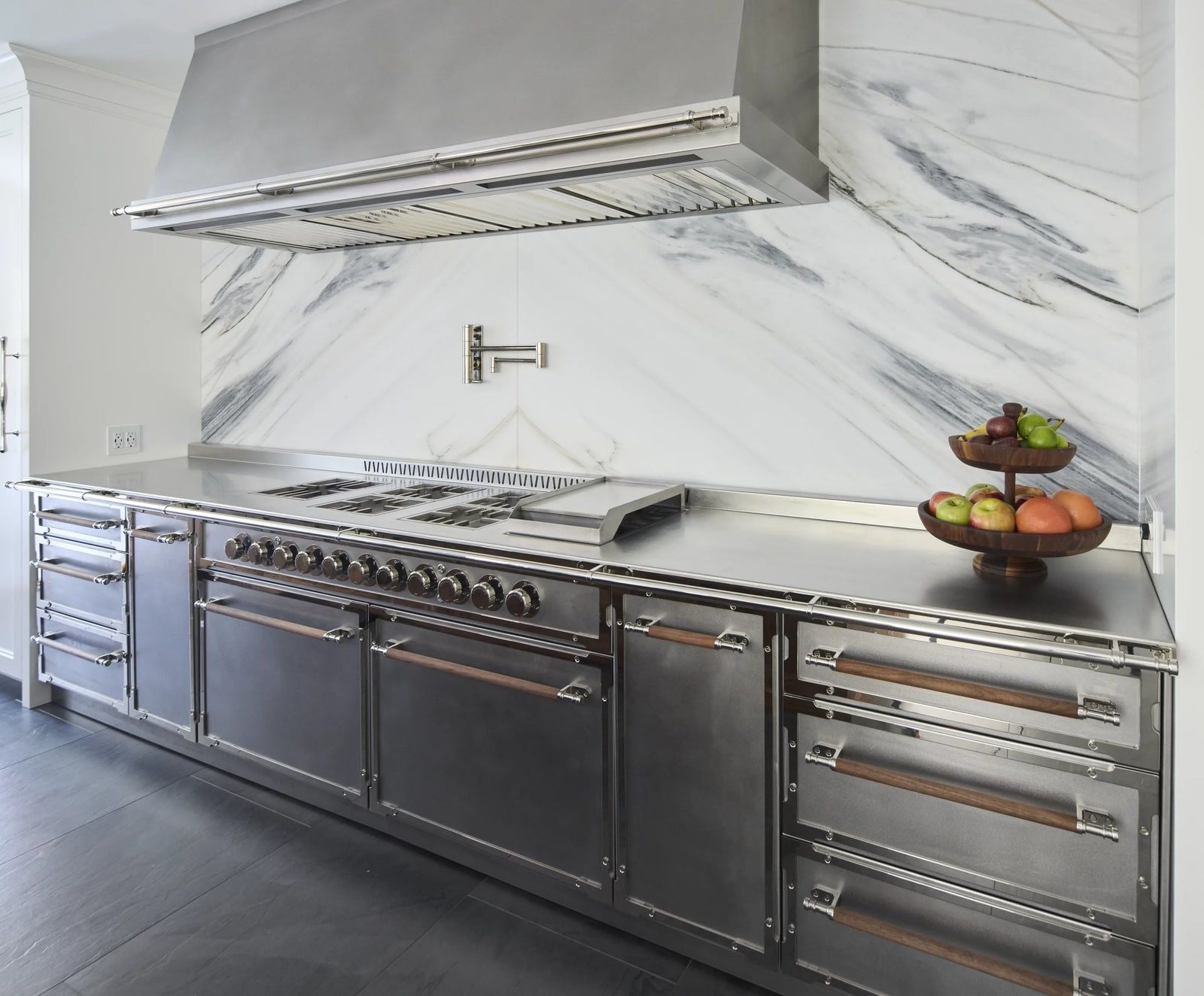
The first time you stand in front of a Coup de Feu, your hand goes looking for knobs that aren't there, at least not the way you expect them. Instead of four or six separate burners, you're looking at one continuous plate of steel or cast iron, hottest in the middle and cooler toward the edges, with a single flame doing all the work underneath. For anyone who has cooked on standard burners their whole life, that first thirty seconds is genuinely disorienting. It's also, according to most people who stick with it, the exact moment the appliance starts to make sense.
Quick answer: cooking on a Coup de Feu feels less like operating an appliance and more like managing a single, continuous heat source: you move pans to the temperature you want instead of turning a dial. The first week feels unfamiliar; by the second or third, most home cooks say it's the part of the kitchen they miss most when they travel.
What You're Actually Working With
If you want the full technical rundown (the graduated heat zones, the surface materials, how it compares to open burners and induction), L'Atelier Paris's guide to French kitchen ranges and their piece on whether a French top range is worth it both cover that ground well. This piece isn't trying to repeat it. What neither of those covers is what actually happens the first time you cook dinner on one, so that's where we're going to spend our time.
The short version, so the rest of this makes sense: heat radiates outward from the center of the plate, so the middle behaves like your hottest burner and the outer ring behaves like your lowest simmer setting, with every temperature in between available somewhere on the surface. You're not choosing a heat level. You're choosing a location.
The First Week: What Actually Trips People Up
Almost everyone who switches from gas or induction makes the same handful of mistakes early on. None of them are serious, but they explain most of the frustration people report in week one.
- Treating the whole plate like one giant burner. The instinct is to plant a pot in the center and leave it there. On a Coup de Feu, the center is closer to a sear than a simmer: a pot of stock left there too long will fight you the entire time.
- Underestimating how long the plate holds its heat. Cast iron and steel don't respond instantly the way a gas flame does. Pull a pan off too fast expecting it to cool, and you'll find the residual heat kept cooking for another minute or two.
- Overcrowding the center zone during a big cook. On multi-pot nights, people default to clustering everything near the hottest point out of habit, then wonder why nothing is behaving predictably.
- Skipping the plate's maintenance rhythm. A French top rewards a quick wipe-down and light oiling after use the way a cast-iron skillet does. Ignore that for a few weeks and the surface stops performing the way it did on day one.
None of this is a design flaw. It's just a different mental model than "burner equals heat setting." The learning curve is real, but it's short.
Where the Curve Actually Goes
Day one is mostly observation. Most first-time users spend the first meal or two just watching how a pan of water behaves in different spots on the plate before they trust it with an actual dish.
By the end of week one, the zones stop being abstract. You start instinctively reaching for the outer ring for a sauce that needs to hold, and the center for a hard boil or a sear, without thinking about it as a "setting."
By month one, the behavior most people report is the same one that shows up in almost every account of switching to a French top: they stop turning dials entirely and start moving pans, the way a line cook slides things across a flat-top grill. That shift (from adjusting the heat source to adjusting your position on it) is really the entire learning curve, condensed into one habit.

Multiple pots, one continuous surface: the exact scenario a Coup de Feu is built for.
The Dishes Where a Coup de Feu Actually Earns Its Keep
This is where the appliance stops being a novelty and starts being genuinely useful, particularly for the kind of cooking that shows up around holidays and dinner parties:
- Sauces that need a slow, unattended reduction: a beurre blanc or a pan sauce can sit at the edge of the plate holding a steady simmer while you handle everything else.
- Risottos and other dishes that punish inconsistent heat: the ability to nudge a pot half an inch and get a slightly different temperature is more precise than most burner dials allow.
- Hosting nights with more pots than burners: this is the scenario the Coup de Feu was built for. A stockpot at a rolling boil, a sauce holding at the mid-plate, and a finished dish staying warm at the rim, all on one surface, all at once.
- Classic French technique generally: if you're working through classic French recipes that call for careful heat control rather than a quick blast, a graduated surface does a lot of the work a recipe usually asks you to do by hand.
What It Feels Like Once It Clicks
People who've made the switch tend to describe the same turning point: the moment they stop thinking about the range as an obstacle and start treating the whole surface as usable space. Cooking gets quieter: less clanging pots on and off burners, less turning knobs mid-stir. It starts to feel closer to how a professional kitchen actually runs, where the appliance is just there, doing its job, and the attention goes entirely to the food.
Is a Coup de Feu Right for How You Actually Cook?
It's not the right fit for every kitchen or every cook, and that's worth being honest about. If most of your cooking is quick weeknight meals for one or two people, a Coup de Feu is more capability than you'll use day to day; a smaller footprint might serve you better, and it's worth working through how many burners you actually need for your household size before deciding. If you regularly cook for a crowd, lean on sauces and reductions, or just want one surface that can do everything from a hard sear to a gentle hold, it's worth weighing against the alternatives in our breakdown of gas, induction, and dual fuel ranges.
It's also a decision that's easier to make well before a renovation is underway rather than after. If that's the stage you're at, what to know before you remodel around a range is a good next stop.
Not hard, just different. Most first-time users say it takes about a week of regular cooking to stop thinking in terms of burners and start thinking in terms of zones on the plate.
Depending on the model and how hot you need the center zone, expect roughly 5-10 minutes from cold start to full working temperature. That's longer than a gas burner, but the tradeoff is a surface that holds heat far more evenly once it's there.
No. Most techniques transfer directly. The adjustment is mainly about temperature control (using position on the plate instead of a dial) rather than changing the way you actually cook a dish.
No. It rewards attentive home cooks as much as trained chefs. The appliance does reward people who cook often and care about consistency, but it doesn't require professional training to use well.
Thinking About Making the Switch?
If the idea of one continuous surface that can sear, simmer, and hold all at once sounds like how you'd actually want to cook, the best next step is seeing your options laid out for your own kitchen. L'Atelier Paris's range configurator lets you build a Coup de Feu configuration (sized, finished, and priced) around how you actually cook, not the other way around.

Marcus Ellery
Marcus Ellery is a U.S.–based design writer and home–living enthusiast with a passion for exploring how thoughtful craftsmanship shapes modern spaces. With over a decade of experience covering kitchen innovation, luxury interiors, and architectural design trends, Marcus brings a balanced blend of storytelling and technical insight to every piece he writes.
More from Kitchen Renovation Ideas


Join Our World of Design & Cuisine
Receive curated stories on French craftsmanship, design inspirations, and culinary living — straight from French Ranges USA.